 Monteage
Search is no longer the same as it once was. Users now rely on AI tools to get answers. They ask a question. Then receive a detailed reply. A person looking for a dentist, a digital marketing agency or a coaching centre may turn to an AI asking for a recommendation instead of scrolling through many search result pages.
This creates a dilemma for businesses. While they still need to keep SEO strong on Google and other search engines visibility does not end there. Brands must also learn how their content can appear to AI answer systems. A coaching institute might rank for "JEE coaching centre in Chennai". That ranking might not show up in AI answers if someone asks "which institutes offer JEE preparation, experienced faculty and test series?”
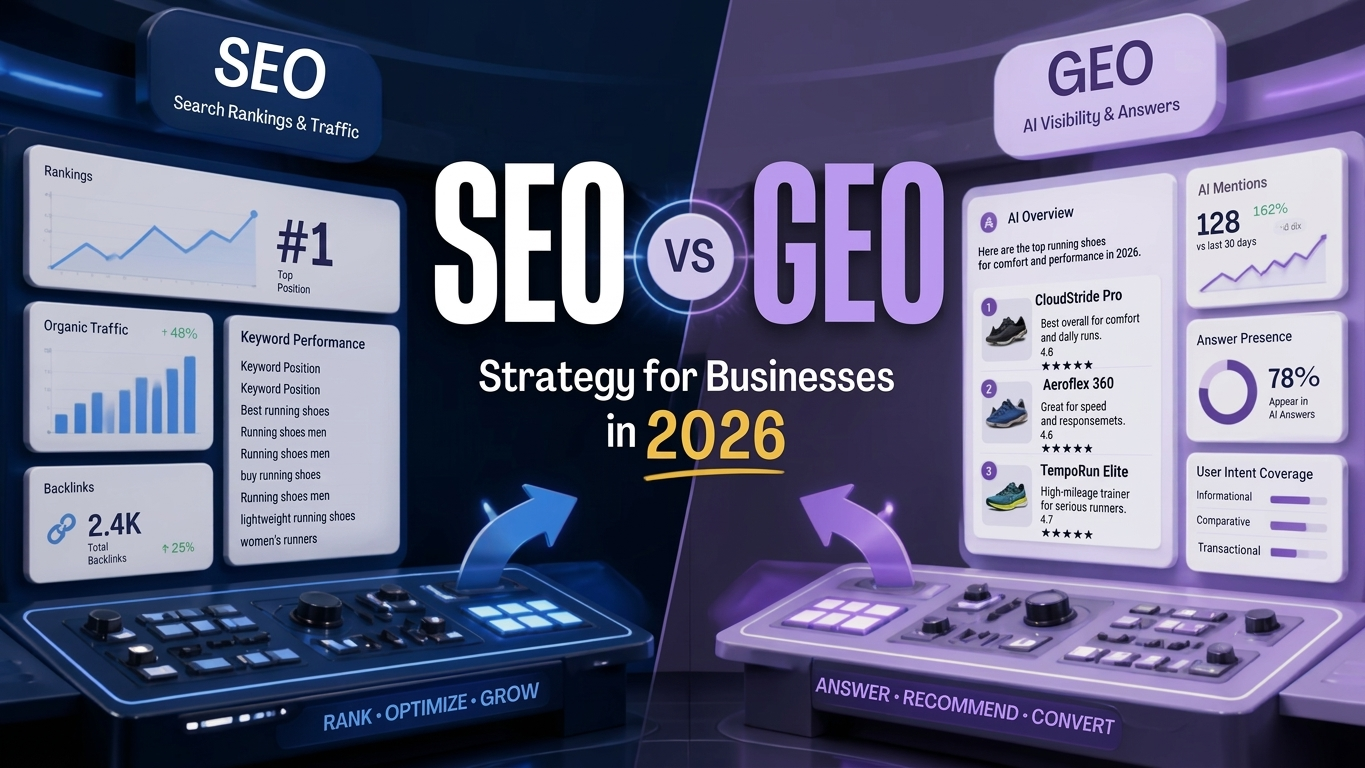
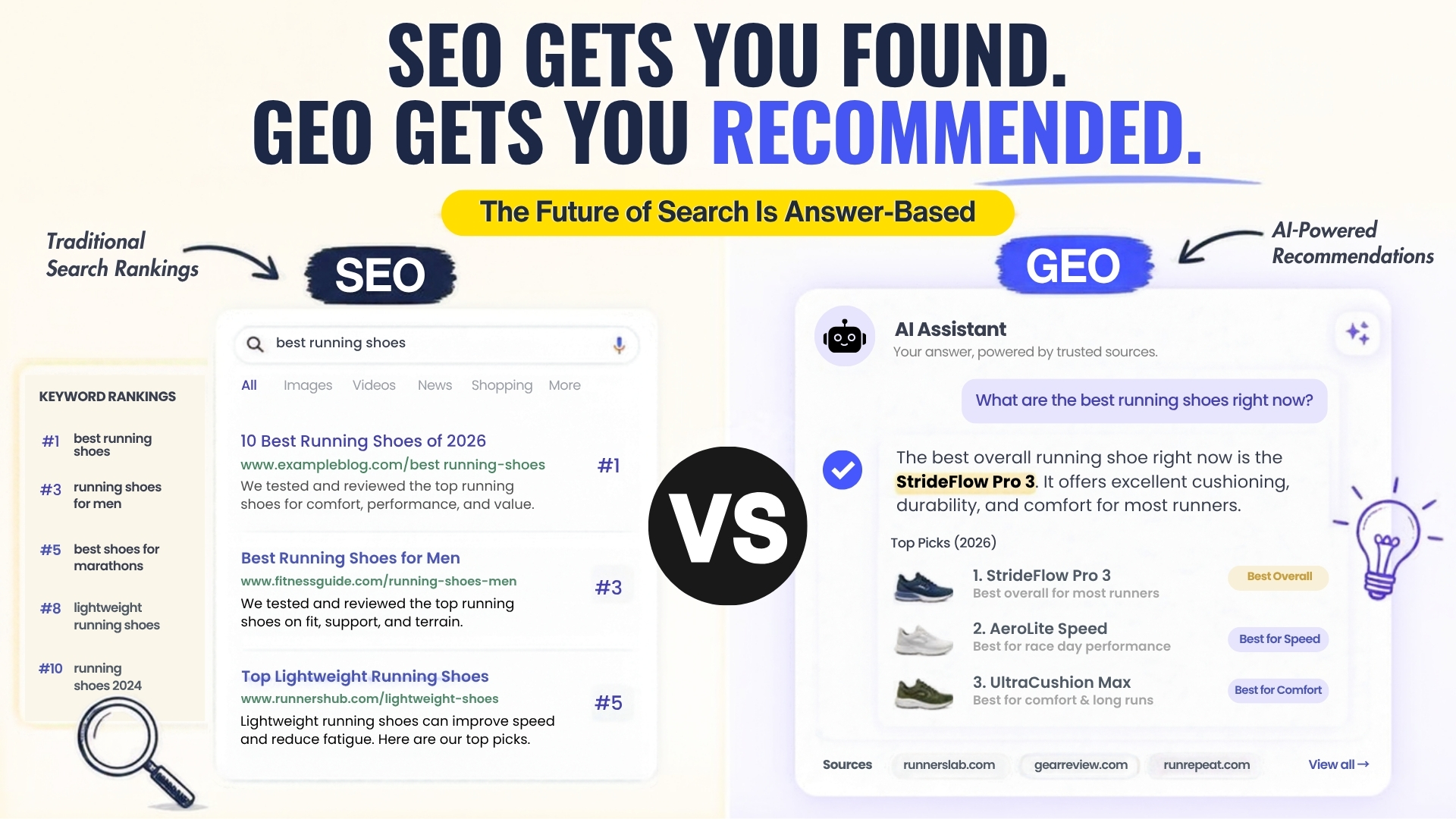
This is where the debate about GEO vs SEO comes in. SEO concentrates on visibility in search results whereas GEO concentrates on visibility in generative search.
What Is SEO and How Does It Work?
Search Engine Optimization helps websites appear in search results for queries. It includes factors such as quality, keyword research, technical performance, website structure, internal linking, backlinks and many other areas. A strong SEO strategy makes sure that a search engine can understand what a website offers and which searches its pages can answer.
Businesses use SEO to draw users who search for their products, services or information. Google rankings still matter, because many people begin their journey with search. A local bakery can use SEO to appear when a buyer searches for "custom birthday cakes near me." That buyer may then visit the website, look over the menu and place an order.
The search experience is also changing. A person planning a trip may use an AI to ask for recommendations. They may ask for "hotels in Jaipur with parking and family rooms" by searching one by one.
This means a business can rank well. Still miss opportunities if its information does not appear in AI-powered results.
Generative Engine Optimization (GEO): What Has Changed?
The biggest difference between GEO and SEO is the change in visibility. While SEO traditionally revolves around ranking a web page GEO focuses on search.
SEO asks questions such as: can search engines understand a page? Are keywords targeted? Does the website perform well technically? Does its content satisfy search intent and more? GEO builds on these questions asking if a piece of content gives an answer is trustworthy and easy to verify can AI systems understand the context and if the brand offers useful information across reliable sources.
Generative Engine Optimization (GEO) focuses on visibility in search. Clear explanations, information, strong topical coverage, expert insights and consistent brand information all help. A software company that clearly explains its services, pricing model, industries served and customer problems gives search systems more to work with than a page filled with repeated keywords. This does not mean SEO is irrelevant. Geo each tackles different parts of a growing search landscape.
Why Google Rankings Are No Longer the Whole Picture
Imagine searching for a web development company. Of browsing ten search results a buyer asks an AI search tool to recommend suitable companies. They may get a list with descriptions, services and reasons for the recommendations. The buyer may never see the search results page.
A business might rank well for the query "web development company ". May never appear in the AI-generated recommendation. While a restaurant can be a result for "Italian restaurants in Delhi " it may not appear when someone asks for an Italian restaurant that is good for a family dinner with vegetarian options.
This is why GEO has entered the marketing discussion. GEO focuses on visibility, in search. Clear explanations, information, strong topical coverage, expert insights and consistent brand information all help.
AI Search Optimization: How Search Behaviour Is Changing
People are now comfortable asking specific questions. Of searching for "best digital marketing agency " a user may ask:
"Which digital marketing agencies can help a small business improve its local visibility and social media presence?"
AI Search Optimization lets machines pull facts from websites, reviews, articles, business profiles and other places. A tiny clothing brand might look for agencies that know Instagram campaigns SEO and e‑commerce work. The search does not stop at one keyword.
That is why optimization for AI search is vital for companies that want to stay found as search habits change. Keywords alone may not satisfy when answering questions or telling stories. Businesses need content that talks about real world problems and tells what they do. A health care website can explain its services, appointment steps, treatment areas and common patient questions on separate pages that repeat the same search words.
What Makes Content More Visible in AI Search?
There is no sure‑fire path for AI Search Optimization to guarantee that it will mention a business. Generative search engines can draw from sources and ranking factors that behave differently.
Businesses can focus on how they can control the quality and usefulness of the information about their brand. Content should answer questions explaining products and services in plain words including real facts and examples. Keep business facts the same, show true expertise back key claims with trustworthy data cover a whole topic instead of repeating one keyword and use clear headings and logical page layouts.
A service page should explain the service, not just repeat its target keyword. A blog should give information that someone really wants to learn or use. A real estate company can explain the difference between buying and renting, talk about factors and answer questions about paperwork. This gives readers data and gives generative search optimization more context about the topic.
Do Businesses Need Both SEO vs GEO?
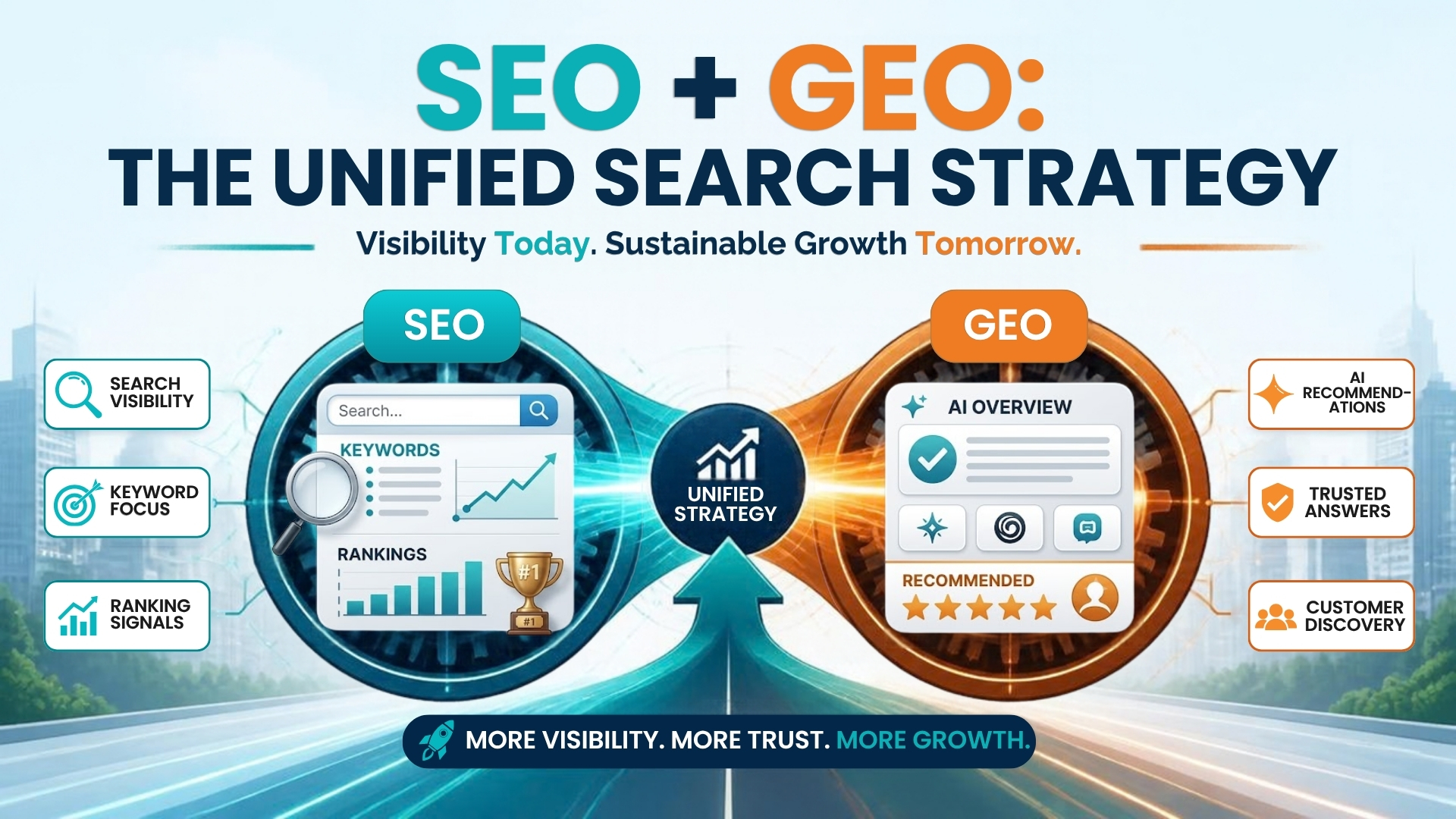
The GEO vs SEO debate should not be treated as an either/or plan. SEO is still very important for being seen in search. Technical SEO, keywords, helpful content and site authority all matter.
GEO adds another layer. Businesses should consider how their data might be read by AI‑powered search tools. A company with inconsistent online data may not appear in generative search results. A company that focuses on AI visibility while ignoring its site, technical health and classic search can also cause problems. A local salon is an example. Its site may rank for salon searches. Its business data, services, location and customer reviews give extra context from other sources.
A combined plan gives businesses a search strategy.
GEO SEO Strategy for Businesses in 2026
A GEO SEO strategy for businesses in 2026 starts with knowing what customers ask. Companies can build service pages, comparison articles, guides, FAQs and teaching material around those questions. Each page should have a purpose.
Brand data should stay the same across the site. Trusted third‑party places. Business names, services, locations and other details should not clash. A coaching centre that lists one address on its site and another on a business profile creates confusion.
Businesses can use a GEO SEO strategy for businesses in 2026 to craft content that answers customer questions while keeping solid classic search roots. Original expertise can add value. First‑hand stories, expert comments, useful examples and specific industry knowledge can make content more important than articles that target only search words.
The Role of Brand Authority
Optimization for AI search does not focus on one page. Information about a business can be found in online places. A company may have a site, business profile, industry listings, interviews, reviews, social media pages and articles that mention its work.
Consistent facts across these places can build an online identity. A restaurant may list its menu and location on its site, have customer reviews on a business profile and appear in food publications. These places give a picture of the business. This does not promise an AI recommendation or mention. It builds a stronger information base for people and AI Search Optimization to understand the business.
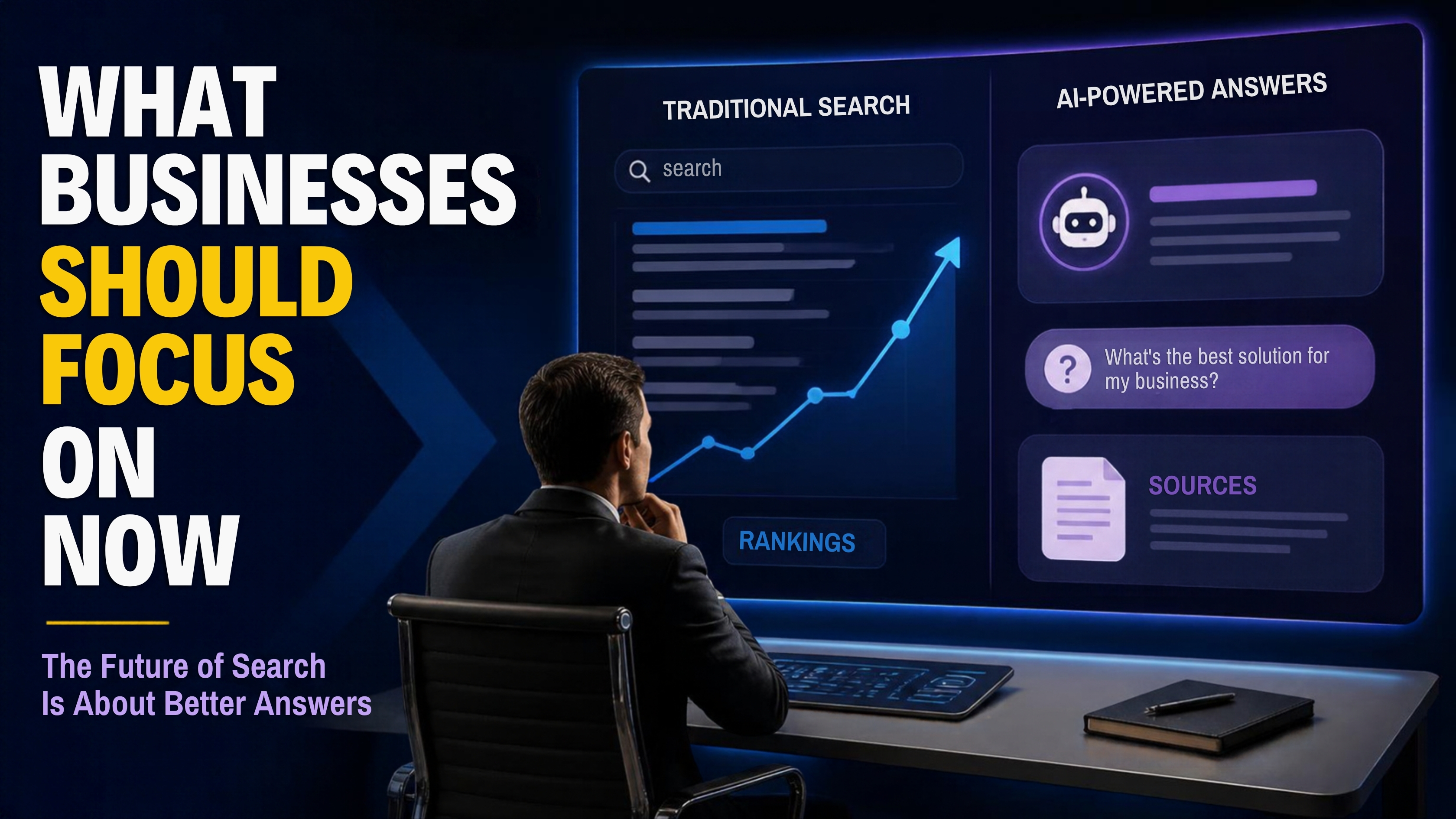
What Businesses Should Focus on Now
The future of search is not about higher rankings. Businesses must think about how people find information, how they ask questions and where their answers come from.
A useful content strategy can include:
- website fundamentals
- Search-focused content
- Detailed service information
- Question-based content
- insights
- Consistent business information
- Credible external mentions
- Regular content updates
- Clear answers to customer problems
We do not want to write content just for machines. Instead we aim to make content that people can trust, understand and act upon. If a customer is comparing two software companies they should be able to see services, features, industries, support options and expertise all in one place without having to hop across unrelated pages.
GEO vs SEO: The Search Landscape Is Expanding
The talk about GEO vs SEO shows a change in how people look for information online. Google rankings still matter. People also use AI-generated answers. Businesses that know both worlds can make content that reaches people.
Visibility is no longer stuck to one results page. A brand can appear in a search result, an AI answer, a business profile, a review, an article or a recommendation, from many sources.
If someone is picking a gym they might look at Google results, read reviews, visit the gym’s website and ask an AI tool to explain which gym fits their needs.
That is why good information matters more than adding more pages. Businesses that put effort into accurate and genuinely helpful content can build a stronger online presence as search changes.



0 Comments