 Monteage
By 2026, AI is no longer just another technological innovation. It has become an important part of how businesses operate, serve customers, and make decisions.
Businesses use AI to understand their customers, analyze data, automate routine work, and improve productivity. The real question is no longer whether a business should use AI. It is about choosing the right AI tools and using them effectively.
Without a clear approach, businesses can adopt too many tools, waste resources, and see little real value from them. An AI strategy helps businesses identify solutions that fit their needs and create measurable results.
AI Is Transforming the Way Businesses Operate
Many teams spend hours on repetitive tasks, including answering customer questions, managing information, creating reports, analyzing data, and producing content. AI tools can handle many of these tasks faster and with fewer errors.
Employees can spend more time on creative, important, and meaningful parts of their work. Using AI in business does not mean replacing people. AI can support employees, reduce their workload, and improve productivity.
Some common areas where businesses use AI include:
Customer service: AI chatbots can answer common customer questions and provide quick support.
Marketing: AI can help businesses understand customer behavior and create personalized campaigns.
Sales: AI sales tools can help identify potential customers and support sales teams.
Data analysis: AI can process large amounts of information and help teams identify useful insights.
Content creation: AI can assist with creating drafts, ideas, reports, and other business content.
Administrative work: AI can reduce the time employees spend on repetitive and routine tasks.
Why Does an AI Strategy Matter?
Using AI without a clear strategy can create more problems than it solves. Businesses may invest in tools they do not need or struggle to understand whether those tools are improving their operations.
A strong AI strategy helps businesses prioritize their efforts, choose relevant AI tools for their industry, and align AI use with business goals.
An effective AI strategy can help businesses:
- Identify areas where AI can create real value
- Determine which repetitive tasks can be automated
- Evaluate which AI tools are worth investing in
- Help employees use AI to perform their jobs more effectively
- Protect business and customer data
- Provide proper training for employees
- Set clear ways to measure the success of AI implementation
- Reduce unnecessary technology costs
The goal is not to use AI everywhere. Businesses should focus on areas where AI can solve real problems and create measurable value.
AI-Driven Business Transformation Is Already Happening
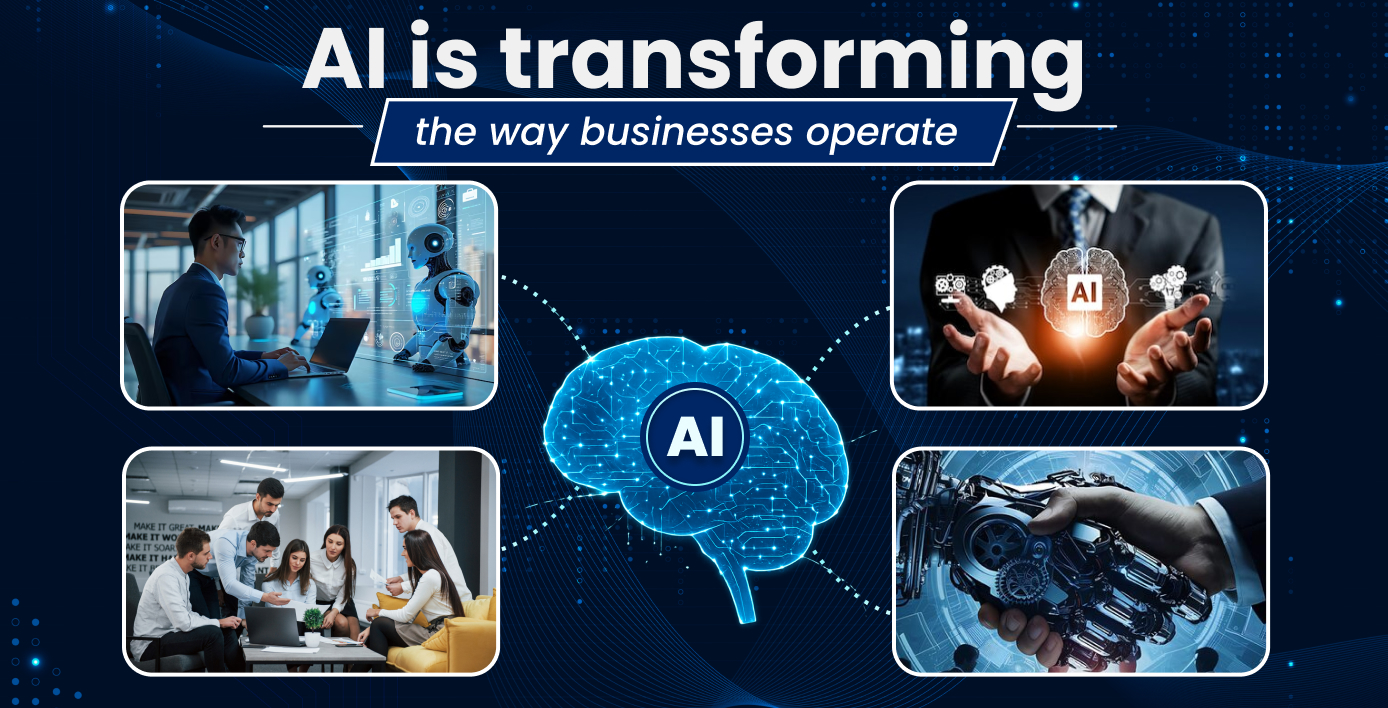
AI is changing the way businesses work. Marketing, sales, customer service, and management teams use AI in their daily operations.
Marketing teams use AI tools to understand customers and create personalized campaigns. Sales teams use AI sales tools to identify potential customers and improve their sales processes.
Customer service teams use chatbots and virtual assistants to respond to common questions and handle routine tasks. Employees can spend more time dealing with complex customer issues.
Management teams can use AI-generated insights to understand business data and make informed decisions.
Businesses can use AI to identify high-performing products, understand customer preferences, predict demand, and identify areas where costs can be reduced.
A strong AI strategy helps businesses introduce these changes while keeping their business goals in focus.
How Businesses Can Build an Effective AI Strategy

An AI strategy does not require a business to change every part of its operations at once. Businesses can start with specific needs and build their approach based on real results.
A practical AI strategy can include these steps:
1. Identify Business Problems
Businesses should first identify the problems they want to solve. These could include slow customer support, repetitive administrative work, poor data analysis, or inefficient processes.
2. Find the Right AI Solutions
Businesses can look for AI tools that directly address the identified problem. The focus should be on usefulness rather than choosing the newest or most popular tool.
3. Prepare Employees
Employees need to understand how AI can support their work. Proper training helps teams use AI responsibly and get better results from the technology.
4. Protect Business Data
Businesses should prioritize data privacy and security when implementing AI. Customer information, company data, and confidential documents should be handled carefully.
5. Measure the Results
Businesses should track whether their AI investments are producing meaningful results. Useful measurements can include:
- Time saved
- Reduced operational costs
- Improved productivity
- Customer satisfaction
- Increased sales
- Faster response times
- Improved quality of work
Staying Ahead in 2026
Consumers expect better digital experiences, faster responses, and services that understand their needs.
Businesses need to improve productivity, maintain performance, and control costs. These expectations make AI strategy an important part of business planning in 2026.
Companies that use AI effectively can adapt to changes faster and find new ways to improve their operations. Businesses that ignore AI may struggle with productivity, customer expectations, and competition.
AI is not a solution for every business problem. The results depend on how well it is implemented and whether the chosen tools solve a genuine business need.
Businesses should not adopt AI simply because it is popular. They should identify where it can:
- Save time
- Improve business processes
- Reduce repetitive work
- Support employees
- Improve customer experience
- Help teams make better decisions
- Create measurable business value
A well-planned AI strategy can help businesses choose the right tools, improve employee productivity, stay competitive, and build sustainable growth.
Final Thoughts
AI is here to stay, and its role in business will continue to grow. Businesses that carefully plan their AI adoption are more likely to achieve meaningful results than those that rush to use every new tool.
A strong AI strategy helps businesses choose the right AI tools, implement them properly, and measure their impact. It can make everyday work easier for employees and create better experiences for customers.
Businesses do not need to transform everything at once. Start with a real problem, choose the right solution, measure the results, and build from there.
The most successful businesses will not necessarily be the ones using the most AI tools. They will be the ones that understand where AI can make a real difference and use it effectively.
Keep learning, stay focused, and take small steps. AI can become a real advantage for your business when it is used with a clear strategy.





0 Comments