 Monteage
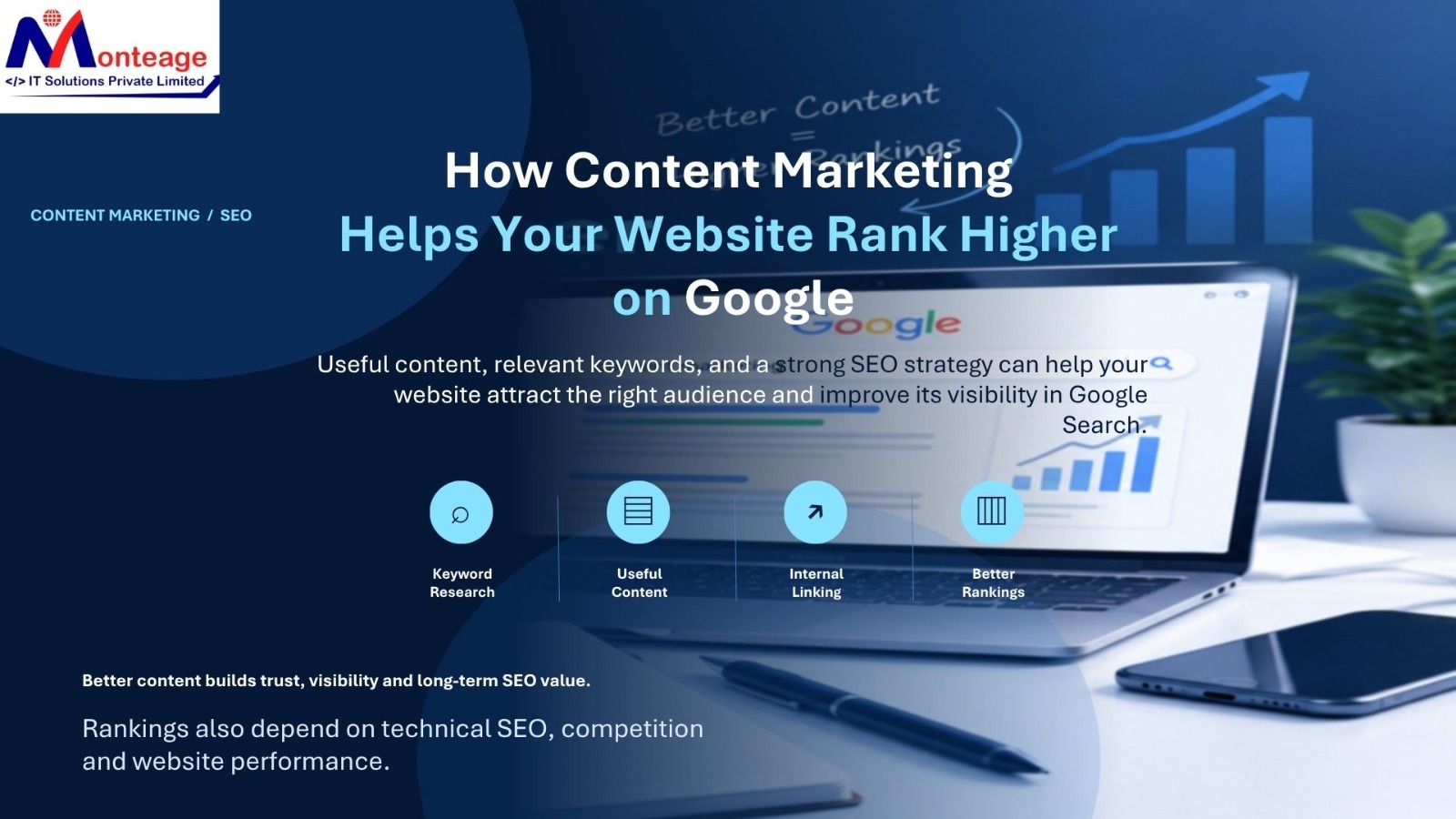
It's not enough to add keywords to a few pages and wait for traffic to arrive. Understanding how content marketing improves website rankings can help businesses create useful, relevant information that meets people's needs. Search engines aim to show content that helps users find answers, understand services, solve problems, and make better decisions. Content marketing therefore plays an important role in SEO.
A website is more likely to appear in relevant searches when it provides useful information that answers real questions. This is one way content marketing improves website rankings over time. Blog posts, guides, service pages, case studies, and FAQs can help people find the information they need while learning more about a business.
However, producing more pages does not always lead to better results. Google aims to show useful, trustworthy content created for people. Therefore, companies should understand their audience, answer their questions, and provide useful information rather than create pages just to attract search traffic.
What Is Content Marketing?
Content marketing involves creating and sharing useful information to attract the right audience, build trust, and support business goals. For a website, it can include blog posts, product pages, service pages, guides, case studies, FAQs, videos, research reports, and downloadable resources.
Different content types serve different purposes. For instance, someone looking to improve website speed might only want to understand the problem, while someone searching for a website development company is likely already looking for a service provider.
A good content plan should address both types of visitors. Informative articles help people understand a topic, while service pages explain how a business can help. As visitors explore these pages, they can learn about different options before deciding whether to contact the company.
A clear content plan also shows how content marketing improves website rankings by helping businesses answer questions their audience searches for online.
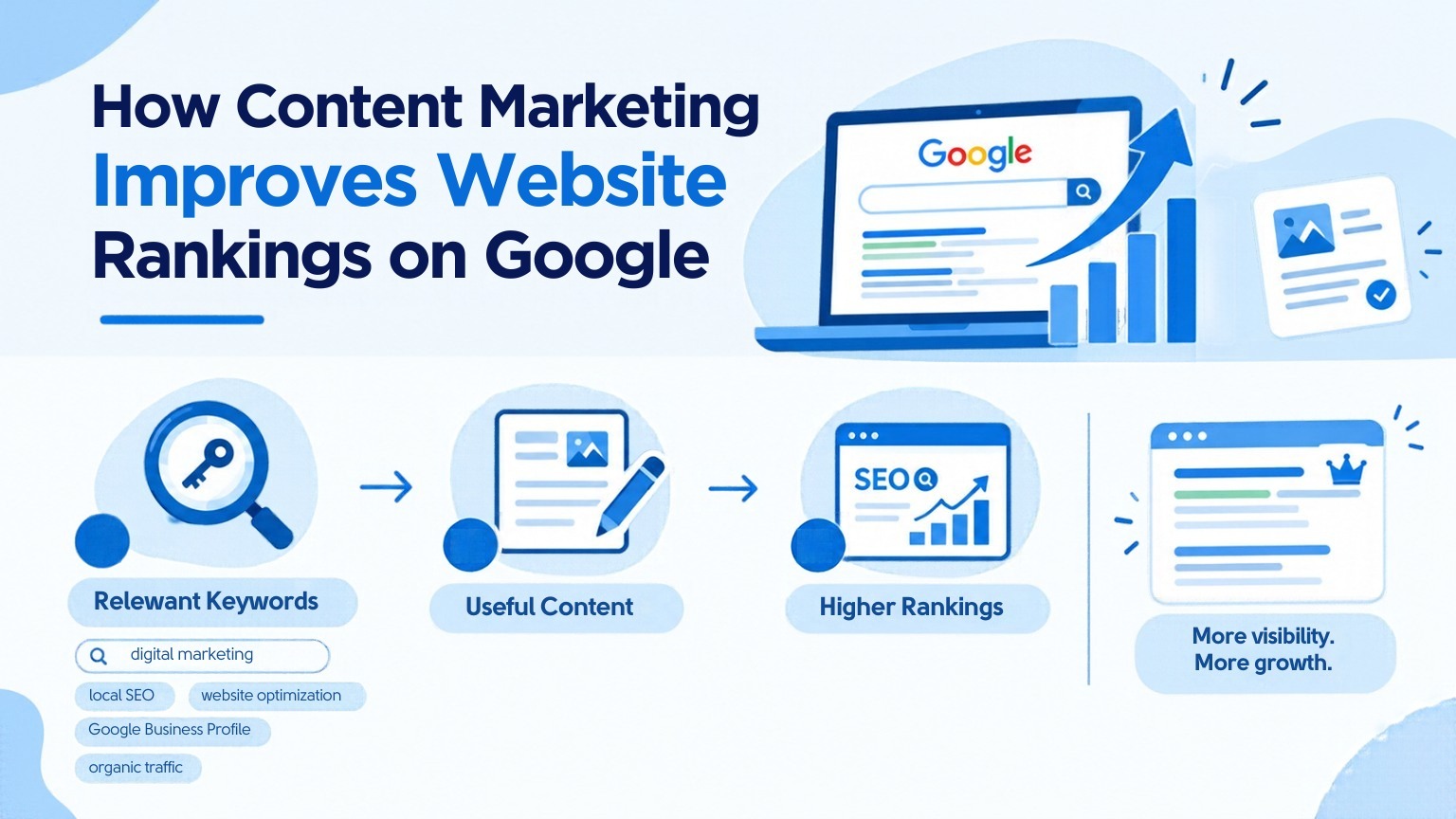
How Content Marketing Improves Website Rankings on Google
Content and SEO are linked because search engines need to understand what a page is about and whether it answers a person's question. When businesses publish useful information related to their services, they give search engines more context about their website.
Content marketing can improve website rankings in several ways, provided businesses focus on useful information, clear writing, and regular updates.
1. It Can Help You Rank for More Relevant Keywords
Keywords help search engines match a page with relevant searches. However, a content plan should focus on answering questions rather than repeating the same keyword throughout an article.
One topic can lead to many related searches because people have different questions and needs. For instance, someone interested in digital marketing might look for local SEO, website optimization, Google Business Profile management, or ways to increase organic traffic.
Using keyword research strategies, businesses can find related searches and understand what their audience wants to know. They can then create useful pages that answer these questions without forcing every keyword into a single article.
For instance, a digital marketing company could create individual guides covering local SEO, technical SEO, content planning, and website performance. Each guide could answer different questions while adding useful information to the website.
2. It Can Increase Organic Traffic
Organic traffic comes from people who find a website through unpaid search results. A solid content strategy creates more ways for visitors to discover a business, rather than relying only on the homepage or service pages.
For instance, someone researching website development costs might read an informative article before contacting a company. After learning what affects pricing, they might visit the company's services page, review past work, or send an inquiry.
An article that answers a common question can keep attracting visitors months after publication, as long as the information stays useful and the page remains competitive in search results.
This is another way content marketing improves website rankings as part of a broader plan to attract visitors interested in what a business offers.
3. It Can Provide Better Topic Coverage
One article on a topic may not answer every question a reader has. Instead, companies can create related articles that explain different parts of the subject.
For instance, a company offering website development services could write articles on website design, website redesign, mobile-friendly layouts, website security, loading speed, user experience, and website maintenance.
These pages can link to one another, helping readers find more information without returning to Google each time.
The goal should be to provide useful information rather than create many articles that say almost the same thing. A few detailed, helpful pages can offer more value than dozens of repeated posts.
Covering related topics in detail is another way content marketing improves website rankings while giving readers more useful information.
4. It Can Help You Get Valuable Backlinks
Backlinks are links from other websites to your website. They help search engines find pages and understand how other websites refer to your content. However, businesses do not need to focus on getting large numbers of links.
High-quality backlinks can come from content that provides useful facts, original research, helpful guides, or information other website owners want to share.
For instance, a company publishing a report on website design trends might receive links from marketing blogs, industry websites, or businesses discussing the same subject. These publishers may share the report because it gives their readers useful information.
Businesses can improve their chances of earning high-quality backlinks by creating accurate, original, and useful content. Although links cannot be guaranteed, offering something worth sharing is a good starting point.
5. It Can Improve Internal Linking
Internal links connect one page of a website to another. They help visitors find related information and help search engines understand how pages connect.
For example, an article about website redesign can link to the website development services page. It can also link to a website maintenance guide, a responsive design article, and user experience resources.
These links make it easier for readers to explore related subjects. They also help search engines find other pages and understand how they fit into the website.
Include links only when they help the reader. Too many unrelated links can confuse readers instead of improving the experience.
When you connect relevant pages with useful internal links, content marketing improves rankings by supporting better content organization and discovery.
6. It Can Make the Website More Useful to Visitors
People usually visit a website to find an answer, a solution, or information that helps them make a decision. If a page is confusing, repetitive, or filled with irrelevant details, visitors may leave without finding what they need.
Good content makes the experience simpler. Clear headings, easy explanations, useful examples, and relevant links help readers find information without going through unnecessary paragraphs.
Images and bullet points can also make complex topics easier to understand. A mobile-friendly layout and readable text also help visitors use the website on different devices.
Although visitor engagement isn't a direct ranking signal, a good experience helps people use the website and find the information they need.
7. It Can Target Different Search Intents
People search Google for different reasons. Some want to learn about a subject, while others compare services or are ready to buy.
A content plan should address these different needs.
- Informational intent: The user wants to learn about a subject or solve a problem.
- Commercial intent: The user wants to compare services, products, or available options.
- Transactional intent: The user is ready to make a purchase or take a specific action.
- Navigational intent: The user wants to find a particular website, company, or page.
For instance, someone searching for "what is local SEO" will likely need a simple guide. In contrast, someone searching for local SEO services may already be looking to hire a company.
By creating pages that meet these needs, businesses can offer useful information at each stage of the customer's journey. Effective Content marketing strategies give every page a clear purpose and help visitors find the answers they need.
8. It Can Keep Website Information Up to Date
An article that was useful a year ago might contain old statistics, broken links, or information that is no longer correct. Therefore, updating existing content is just as important as publishing new articles.
A content review may involve correcting errors, adding recent examples, improving explanations, removing broken links, and checking whether the page still answers the reader's question.
For instance, a website maintenance guide may need updating if a tool is no longer supported or the recommended process has changed.
Changing an article's publication date doesn't make it better unless you make useful improvements. Updates should focus on accuracy and relevance rather than making old content seem new.
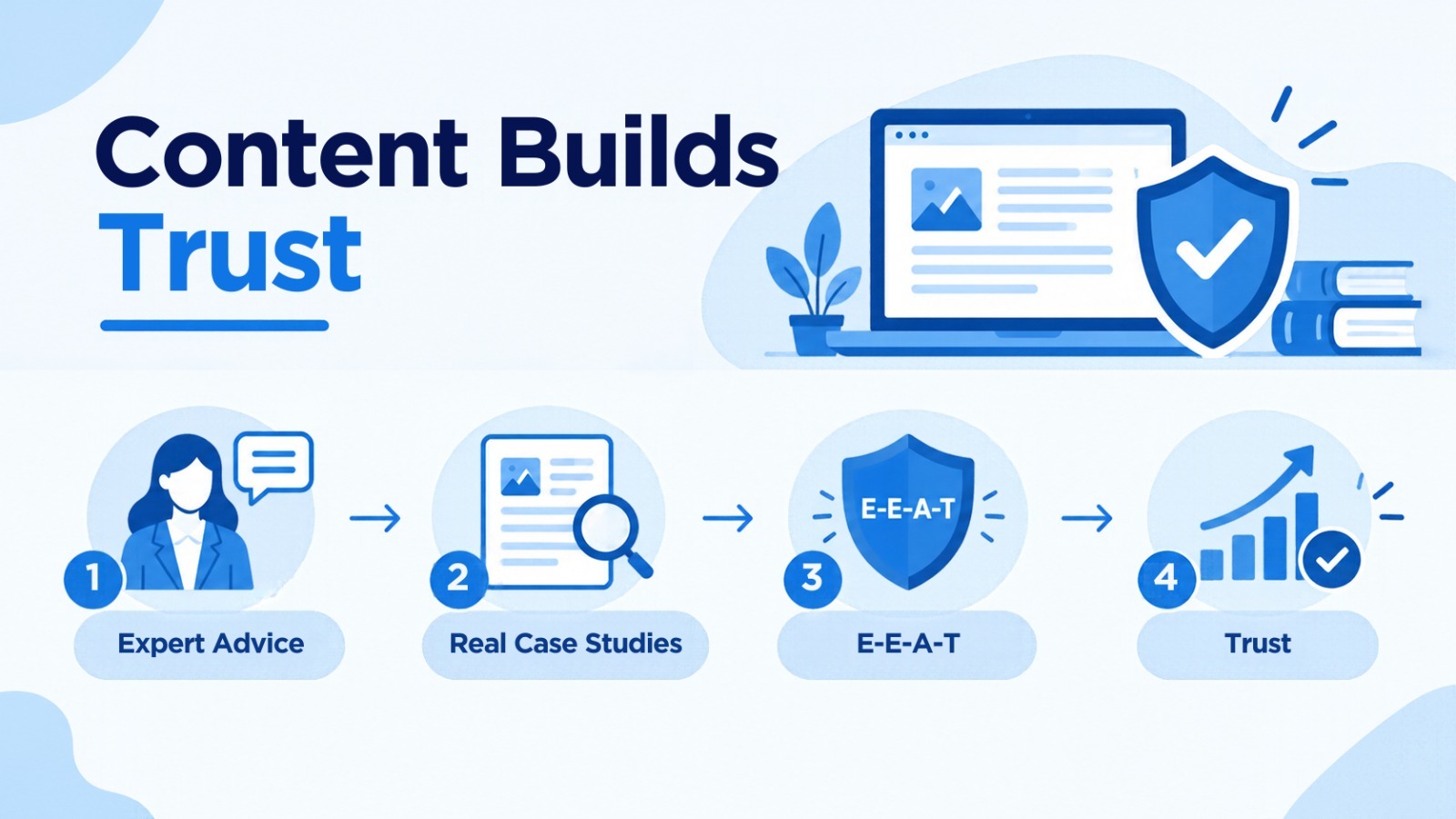
9. It Can Help Build Trust
People tend to trust content that explains a topic clearly, uses reliable information, and includes useful examples. Google discusses Experience, Expertise, Authoritativeness, and Trustworthiness (E-E-A-T) in its content quality guidance.
E-E-A-T is not a single ranking factor. Instead, it describes qualities that help make content reliable and useful.
Companies can show these qualities by sharing real project examples, case studies, expert advice, accurate statistics, and experience-based information.
For instance, a website development company could describe a problem it faced during a project, how it solved it, and the results. This gives readers more useful information than a general article that simply repeats common advice.
As a result, visitors can better understand the company's skills and decide whether its services meet their needs.
10. It Can Target More Long-Tail Searches
Broad keywords can have many meanings, whereas specific searches usually show what a person wants to know.
For instance, "SEO" is a general search term, while "how content marketing helps small businesses attract website traffic" has a more specific purpose.
Businesses can find these opportunities by reviewing customer questions, checking related searches, and learning what people ask before buying a product or service. They can then create articles and guides that answer those questions in detail.
Not every long-tail search needs its own article. If several searches serve the same purpose, a single well-written guide may answer them better than several pages with almost identical information.
11. It Can Turn Visitors Into Customers
Attracting traffic from Google matters, but visitors also need to understand what a business offers and how its services can help.
For instance, someone who reads a detailed guide on website redesign might visit the company's services page, review its portfolio, and eventually send an inquiry.
Content can support this journey by:
- Explaining a problem the reader might be facing.
- Suggesting possible solutions.
- Showing how a service can help.
- Giving examples of previous work and experience.
- Explaining how the service process works.
- Helping readers understand their next steps.
- Providing a clear way to contact the business.
Rather than turning every paragraph into a sales pitch, companies should give visitors enough information to make their own decisions. This creates a more natural path from an initial search to a possible purchase.
12. It Can Provide Long-Term SEO Value
SEO takes time, and so does content marketing. A new article may not attract many visitors right away, but it can continue bringing traffic as long as it remains useful and competitive in search results.
A regular publishing and updating schedule gives a website more chances to answer customer questions and cover topics related to its services. However, results depend on factors such as competition, content quality, website performance, and audience needs.
Content also has uses beyond SEO. For example, a helpful article can become a social media post, an email resource, or supporting material for a sales conversation.
In this way, content marketing improves website rankings while giving businesses useful materials to share across their marketing channels.
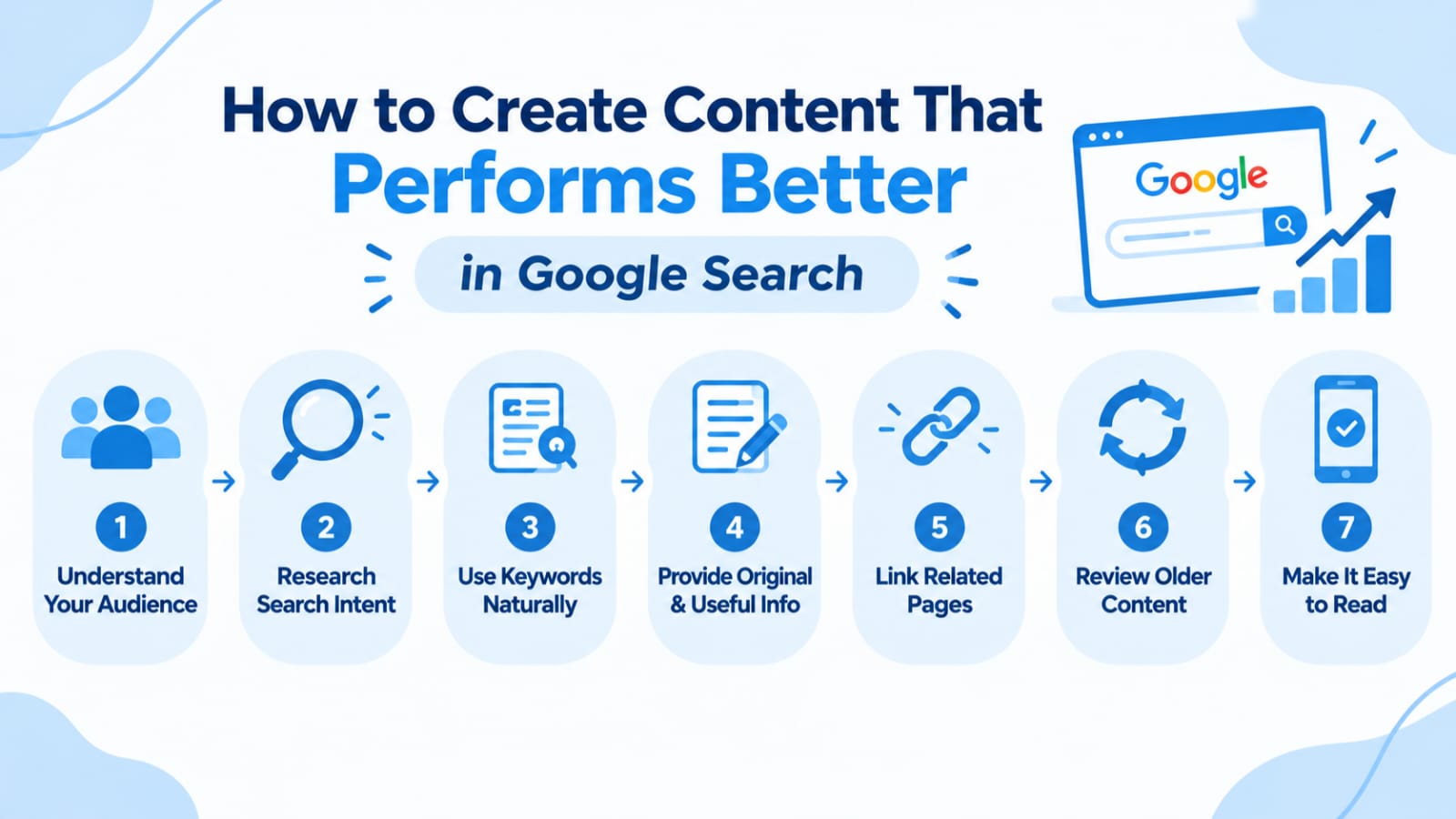
How to Create Content That Performs Better in Google Search
Publishing articles regularly doesn't guarantee good results if they don't answer people's questions. A strong content plan starts with understanding your audience, finding relevant topics, and deciding what each page should achieve.
Following a clear process helps explain how content marketing improves website rankings through relevant topics, useful information, and a better reading experience.
The following seven steps can help businesses create useful content.
1. Understand Your Audience
Find out what potential customers want to know before choosing a product or service. Review customer conversations, sales inquiries, support questions, and industry discussions to find useful topics.
2. Research Search Intent
Look at the types of pages that appear when someone searches for a term. Decide whether they need a general guide, a comparison, a detailed service page, or step-by-step instructions.
3. Use Keywords Naturally
Include relevant keywords in suitable places, such as titles, headings, introductions, and the main text. Effective keyword research strategies focus on relevant searches and user needs rather than repeating exact phrases unnecessarily.
4. Provide Original and Useful Information
Do not simply rewrite articles published by competitors. Include practical examples, explain key details, share real experience where possible, and support factual statements with reliable sources.
5. Link Related Pages
Connect articles, guides, and service pages when they provide more information on the subject. Use clear link text so readers understand what they will find on the next page.
6. Review Older Content
Make a habit of checking important pages regularly for old information, broken links, missing details, and ways to improve explanations.
7. Make Content Easy to Read
Use clear headings, bullet points where appropriate, descriptive links, and relevant images. Also, ensure the website works well on mobile devices, loads quickly, and offers a safe, simple browsing experience.
These steps can help businesses improve website rankings by making their content more useful, relevant, and easier to understand.
Common Content Marketing Mistakes That Can Hurt SEO
A regular publishing schedule will not guarantee good results if the content fails to meet readers' needs. Companies should avoid mistakes like overusing the same keywords, publishing similar articles, ignoring search intent, and failing to update outdated information.
The infographic below highlights common content marketing mistakes, explains why they matter, and shows how businesses can address them.

Avoiding these mistakes helps businesses create a more useful website. Instead of focusing only on rankings or the number of articles published, a strong content plan should prioritize accurate information, original ideas, relevant topics, and a strong visitor experience.
Conclusion
Content marketing can help businesses attract relevant visitors by answering customer questions, explaining their services, and providing useful information. When pages match real searches and offer helpful answers, they have more opportunities to reach people interested in the topic.
The goal is not to produce as much content as possible. Instead, companies should understand their audience, research relevant topics, link related pages, and keep information accurate. Good technical SEO and a well-organized website also help search engines find and understand the content.
Ultimately, content marketing works best when companies treat it as a long-term plan to provide useful information rather than a quick way to rank higher on Google. With regular improvements and a clear content plan, businesses can strengthen their online presence, build trust, and help potential customers make informed decisions.
A well-planned approach can also support Google website rankings by keeping content useful and relevant. Businesses should remember that Google website rankings depend on more than content alone. Website performance, competition, technical SEO, and information quality also matter. A balanced approach can help businesses improve rankings while creating a better visitor experience.



0 Comments